
Trump's Massive Iran Threat: What's the Endgame?
A 13th consecutive night of U.S. bombing followed a warning by Donald Trump of a "massive attack" against Iran, adding to questions over what constitutes victory for the U.S. and how it can be achieved.
Republican Representative Michael McCaul told Fox News the U.S. military "was winning this war against Iran," and with the conflict poised for a major escalation, it seems the metric for victory continues to shift.
Goals of stopping Tehran from getting a nuclear weapon, degrading its ballistic missile arsenal, and ending its regional proxy threat now seem to be superseded by the immediate priority of fully reopening the Strait of Hormuz where one fifth of the world's energy products transits.
"If Iran doesn't have exclusive control of the Strait of Hormuz and if the U.S. doesn't unfreeze the majority of Iran's frozen assets, I think this could be considered a win," Zev Faintuch, head of research and intelligence at security firm Global Guardian, told Newsweek.
Freeing up around $24 billion worth of Iranian funds was said to be among the terms of the June 17 memorandum of understanding (MOU) which paused the Iran war, opened the Strait of Hormuz, and preceded 60 days of talks about Tehran's nuclear program.
Faintuch said the latest strikes did not curb Iran's nuclear program as much as the 12-day war last June did but Iran's conventional military capabilities had been degraded, "so that's probably considered a victory."
He believes the Trump administration will try to find some kind of off-ramp before September, around 60 days before the midterms. "We have another two to four weeks until there's going to be a pretty desperate diplomatic play."
...
Latest US Strikes
The U.S. president has said Iran was responsible for attacks by Tehran-backed Houthis on shipping in the Red Sea and the Bab al-Mandab Strait, which have threatened the other major chokepoint for shipping in the region.
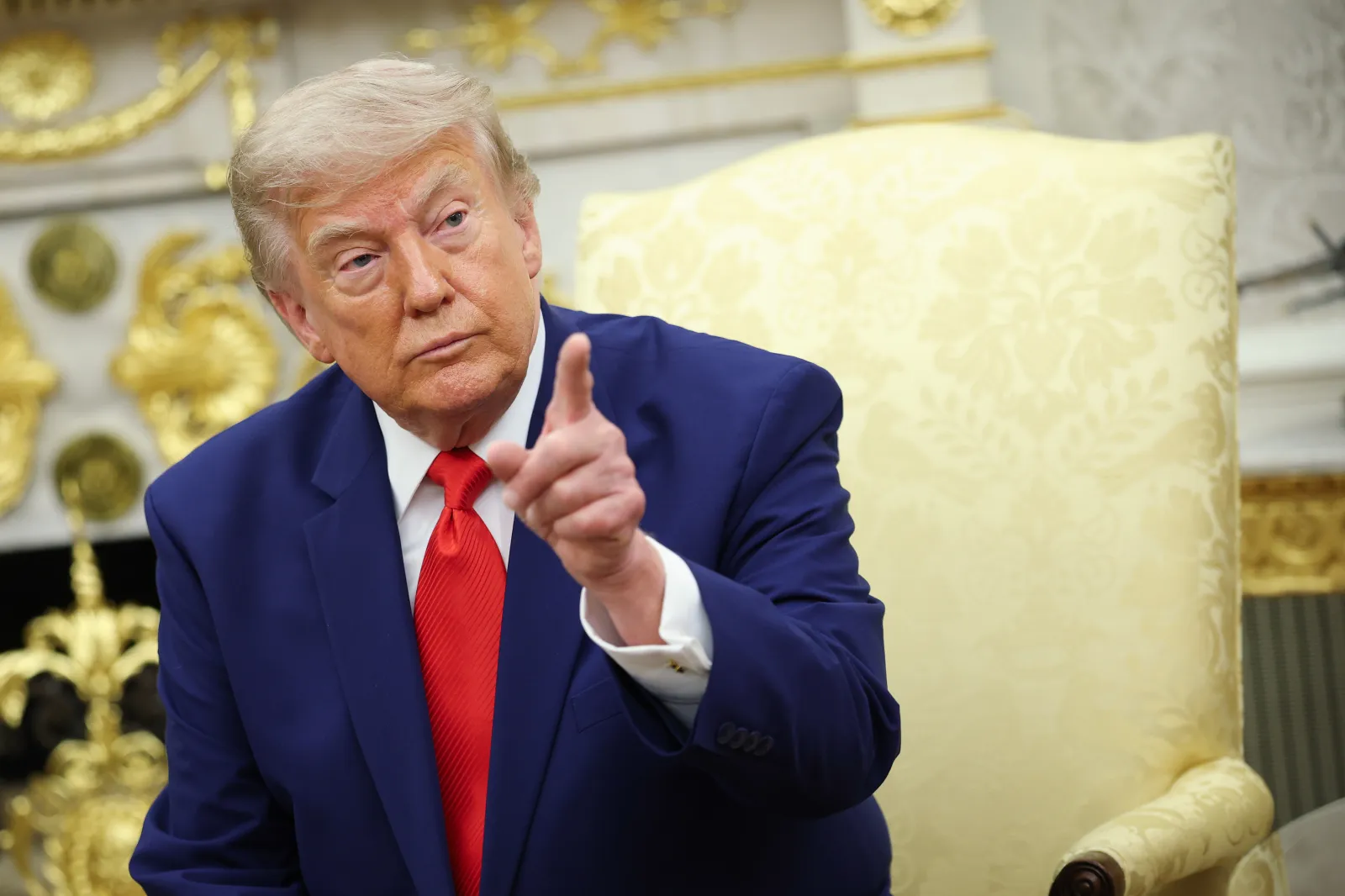
Trump told Axios Thursday, "I am considering a massive attack, bigger than ever before," without specifying further." The outlet reported that two other U.S. officials said no new orders have been given to the military.
"I think what it means is a dramatically escalated air campaign," retired U.S. Vice Admiral Robert Murrett told Newsweek. "I don't see any evidence of large deployments of ground forces, or indicators that any kind of significant ground activity would take place."
After Trump's comment, U.S. Central Command announced another night of strikes against Iranian military targets, with the aim of diminishing threats to commercial shipping from the Islamic Revolutionary Guard Corps (IRGC).
On Friday, separate strikes were reported, with one near Piranshahr in northwestern Iran. Another was on an IRGC naval base at Zibakenar on the Caspian Sea coast, with images showing smoke rising in the aftermath, independent outlet Iran International reported.
Aurélien Colson, academic co-director of the ESSEC Business School Institute for Geopolitics & Business, told Newsweek the U.S. can further hurt Iran by bombing facilities, destroying air defenses, tightening sanctions, and raising the military and economic cost for Tehran.
"But that is not the same as winning," he said, "there is no purely military solution to the Iranian nuclear question, which remains the key issue, in spite of the U.S. administration being focused on reopening the Hormuz Strait."
"The U.S. can punish Iran, but it cannot bomb Iran into a stable nuclear settlement. If Washington defines victory as regime collapse or total surrender, it is setting itself up for failure."
A U.S. strike at Iran’s Shalamcheh border crossing with Iraq was reported on Thursday by Iran’s Mehr News Agency.
Iran analyst Hamidreza Azizi, from the think tank SWP Berlin posted on X this could signal a preparatory move for the deployment of special operations or ground forces or allow for the advance of armed insurgent groups.
...
Pickaxe Mountain a Target
U.S. Energy Secretary Chris Wright told ABC News that Trump's focus is "to prevent Iran from achieving nuclear weapons."
It was this capability the U.S. president had in mind when he threatened on Tuesday to bomb the underground nuclear facility Pickaxe Mountain, 140 miles south of Tehran and just over a mile from the Natanz nuclear facility that was among Operation Midnight Hammer's targets last June.
Iran has warned it would retaliate against any attack on its infrastructure or nuclear facilities with strikes against regional targets. There is speculation that this could include within Israel, where shelters have been opened across the country as a precautionary measure for potential escalation, Israeli media reported.
"These developments suggest that the conflict may be entering a more dangerous phase, potentially comparable to the peak of the 40-Day War," Azizi said on X, referring to the conflict that started on February 28 with the initial U.S. and Israeli strikes on Iran.
"It remains unclear what the U.S. can do in this latest series of strikes that it has not done before," Vuk Vuksanović, associate at the London School of Economics think tank, LSE IDEAS, told Newsweek.
"The only thing that the U.S. could do to try and change the outcome is too dangerous even to contemplate, which is a full-scale ground invasion of Iran."
The number of U.S. service members killed during the war in Iran was lowered from 18 to 14 on Thursday and the prospect of more American casualties would be sensitive for Trump given his previous antipathy to the "forever wars" of his predecessors.
Iran also retains the capacity to strike desalination and other critical infrastructure in the Gulf countries, which would trigger a humanitarian catastrophe in these countries, Vuksanović said.
"The current situation is paradoxical—while a diplomatic resolution of the conflict is nowhere in sight, the price of further escalation is enormous and difficult to contemplate."
Meanwhile, Murrett, deputy director of the Syracuse University Institute for Security Policy and Law, said that a victory for the U.S. at this stage would be to reopen the Strait of Hormuz at scale and initiate significant talks about Iran's nuclear program, ending backing for Tehran's proxies and no more attacks by Iran on U.S. Gulf allies.
"The key issue relative to this is the level of pain tolerance that the Iranian leadership and the different segments the Iranian leadership have, and so far, it looks like it's pretty high."
Contact Newsweek editors on this story: Frances Mao and James Debens