Why Did He Design a Roller Coaster That Ends Lives?
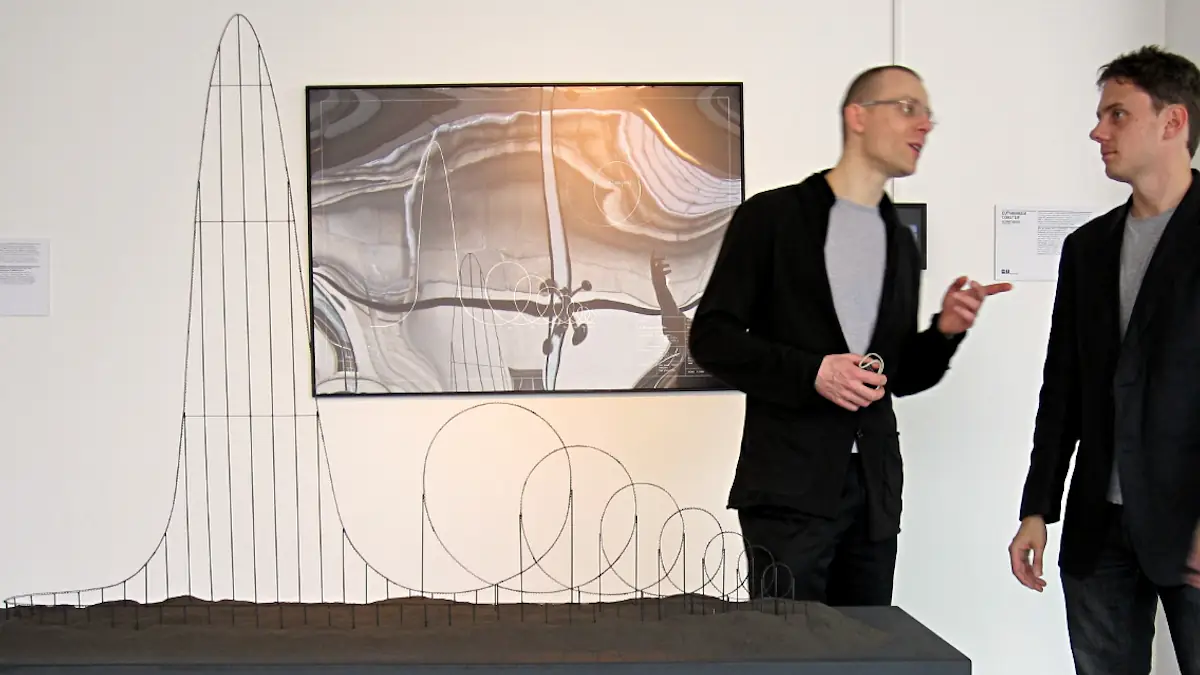
The man behind an infamous ‘ euthanasia coaster ’ that kills all who ride it has revealed the reason that he designed it in the first place. It’s a fascinating thought experiment - if a little dark - but Julijonas Urbonas explained his reasoning. The ‘Euthanasia Coaster’ was designed by Lithuanian artist Julijonas Urbonas Urbonas is certainly an interesting character - he’s an artist-researcher most famous for designing his remarkable euthanasia coaster , a theoretical theme park ride designed to kill anyone who boards it. This ‘hypothetical death machine’ - as he calls it - was devised when he was studying for an engineering PhD. He used to work at a theme park, so that clearly impacted his thinking as well. The premise is simple - the roller coaster gets up to remarkable speeds of over 220 miles per hour, catapulting riders through loops on a 1,600-foot drop to the grave. The idea is that the G-forces of the speed and loops would reach over 10, which would be enough to cause - Urbonas said - a ‘painless’ death. It’s never been brought into reality, but plenty of simulations have been run and it certainly captures the public imagination. But, why did he design it in the first place? Julijonas Urbonas gave his reasons for designing the euthanasia coaster The former Royal College of Art student explained that his novel idea could actually thin out the world’s exploding population. However, he did add that people would board voluntarily. There would also be a button that riders would have to press in order to commence the huge 1,600-foot drop at the start. He described it as a ‘humane’ death, as the loops would cause blood to pool in the lower extremities, decreasing flow to the brain and eventually causing loss of consciousness. Eventually, the brain would shut down through lack of oxygen. He added: "In a few words, humour here eases, facilitates the stressful debate, but also proposes the ritual of death could be merrier." While we’ve never seen the roller coaster in real life, and - to be honest - we might never see it, there are simulations that show what would happen, often from pretty shocking perspectives. Urbonas with a model of his Euthanasia Coaster. Credit: Wikimedia Commons/Justin Pickard The simulations of the ride are pretty shocking In one simulation, shared by user @ridesnslides, the video shows the ride’s mechanics and visual experience. The video begins with a slow ascent to just shy of the tallest building in America. Once at the peak, riders are given a final choice: descend safely or continue. If they choose the latter, each must manually press a button to initiate the ride. The inversions are engineered with progressively smaller diameters to maintain a constant force of 10Gs - far beyond what most human bodies can withstand. For comparison, Formula 1 drivers experience just over 6Gs during sharp turns, and Apollo 16 astronauts encountered 7.19Gs during re-entry. “You would gradually begin experiencing worsening cases of cerebral hypoxia, meaning your blood would rush to the lower parts of your body, and so your brain wouldn’t be getting enough oxygen to survive,” the user said, cited by Vice . “The first thing that you would notice is your vision greying out, which would then gradually turn to tunnel vision. From there, you would begin experiencing a blackout, and ultimately, you would eventually lose consciousness and die," they added. Featured image credit: Wikimedia Commons/Justin Pickard