Renters Cash In: Unbelievable Savings in These US Neighborhoods
With average US mortgage rates hovering around 6.5% — miles above the 3% bargains of the pandemic — and an inflation rate still above pandemic levels, the math ain’t mathing for homebuyers.
And there are some markets — found in affordable Midwestern and Southern towns, as well as pricey West Coast enclaves — where the gap between buying and renting is particularly acute.
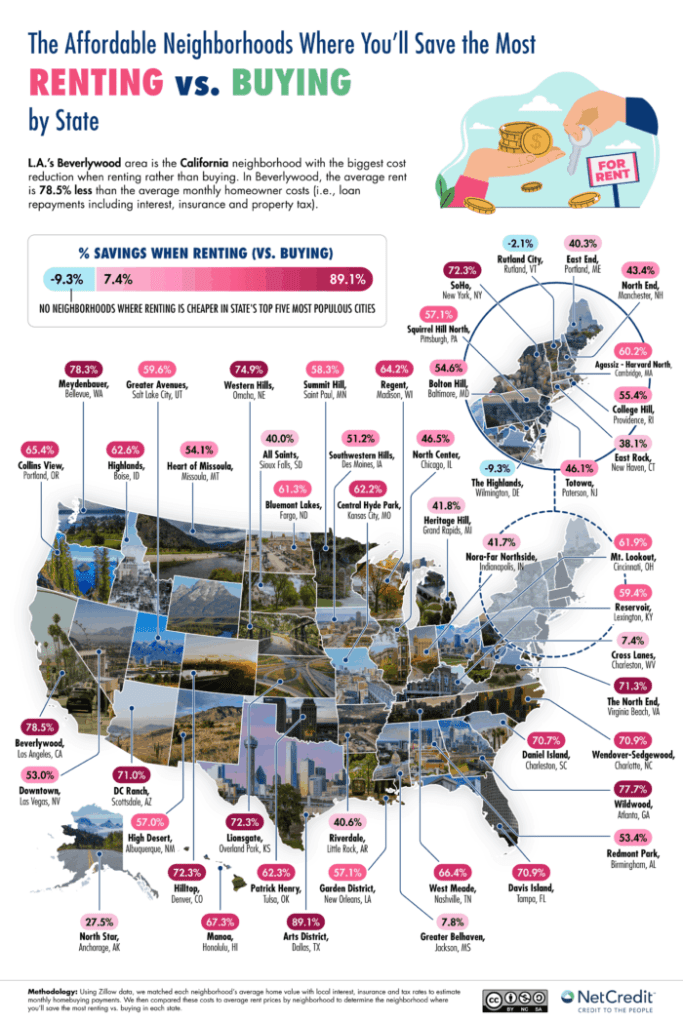
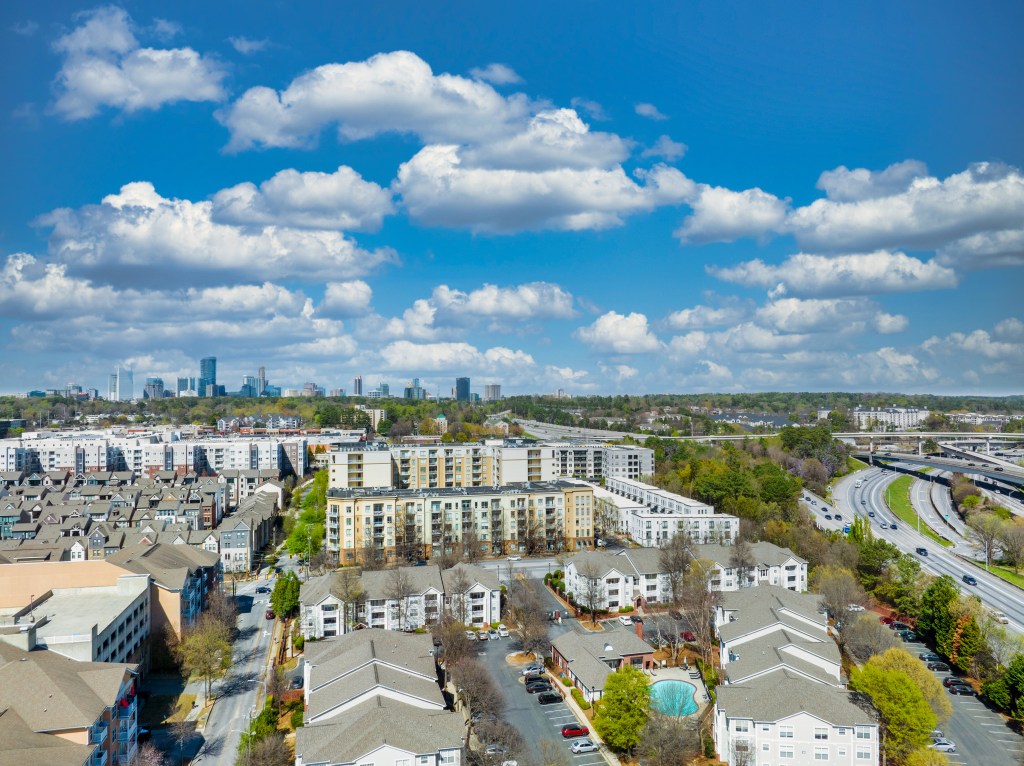
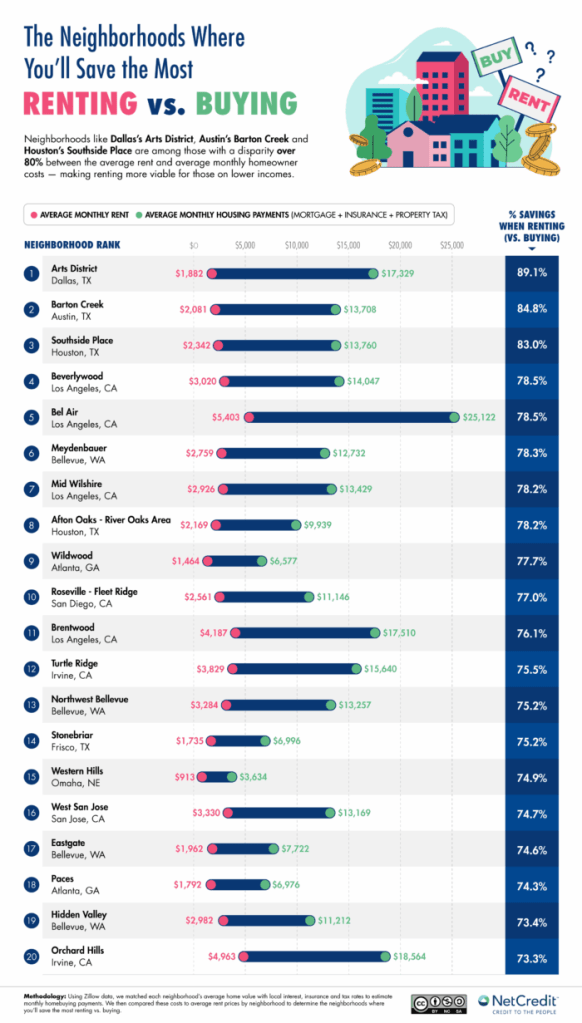
At the top of the list is the small, upscale residential neighborhood of Wildwood, in Atlanta, where renters save 77.7% over homeowners.
Renters in the affluent Buckhead area enclave pay an average of $1,464 per month compared to the $6,577 paid by the average homeowner. That’s according to a new analysis from online lender NetCredit of average rents and monthly homeownership payments across 268 major US cities and 4,241 neighborhoods where rents are capped at $1,500 a month.
“Owning in Wildwood is expensive because it’s a small, land-constrained pocket of large, tree-covered lots close to Midtown, with good schools and a walkable park — all things in short supply and high demand, which pushes prices higher,” said Realtor.com economist Jiayi Xu.
The rental discount comes because of the massive boom in luxury rental construction in the last few years, combined with a scarcity of housing supply.
Wildwood is cheaper for a rental than neighboring big cities because it’s still “an up-and-coming area” and the neighborhood is very suburban without a lot of amenities, according to Brandon Anderson, an Atlanta-based Compass agent. While there is a local Target, it would take 20 minutes to get to a Costco, he said.

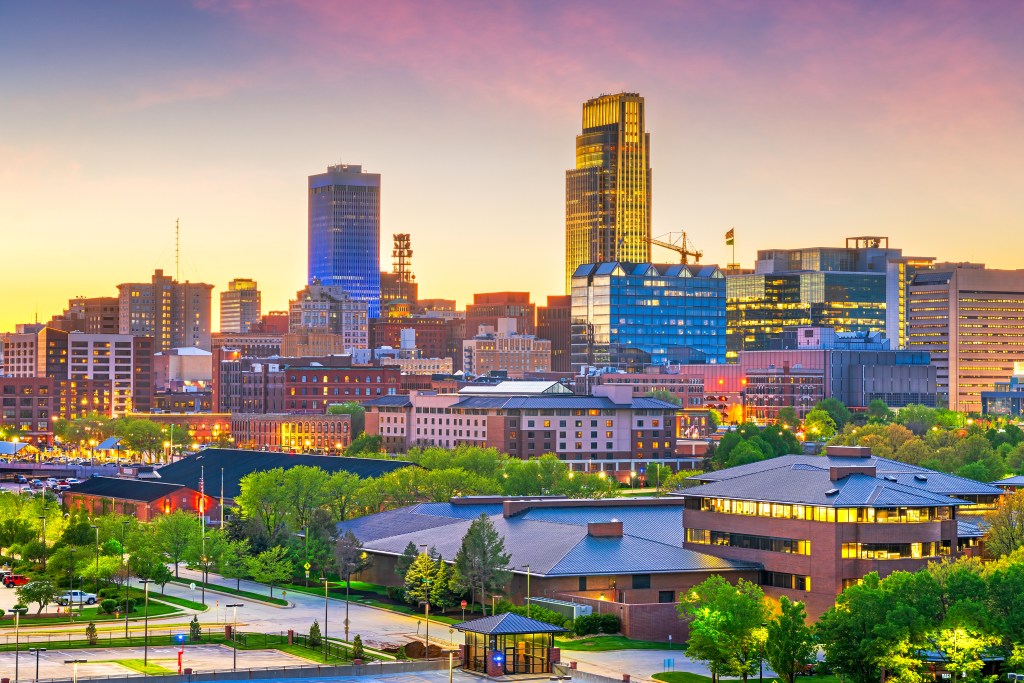
Next up is Omaha, Nebraska’s Western Hills neighborhood, where the average monthly rent of $913 saves tenants 74.9% from the $3,634 monthly cost of homeownership. This sharp divide is fueled by a surge in newer, luxury-leaning homes in the area.
“That lower rent [in Omaha] makes renting a notably more budget-friendly option compared to owning,” Xu said.
Meanwhile, Texas dominates the rankings with several neighborhoods landing in the top 20: Fort Worth (69.5%), San Antonio (64.7% and 57.9%), Austin (61% and 60.4%) and El Paso (56.9%).
Nearly every state has at least one market where renting offers a massive financial edge, but none more so than the Arts District in Dallas. There, renting costs an average of $1,882 a month versus $17,329 to buy, an 89.1% monthly difference. Spanning 20 city blocks, the vibrant enclave holds the title of America’s largest contiguous urban arts district.

“That’s because it’s a small, dense, luxury urban core built around high-end condo towers, where prices are set by premium finishes, amenities, and a wealthy buyer pool,” said Xu.
Los Angeles’ Beverlywood area follows with the average rent clocking in at 78.5% less than the average homeowner costs.
West Coast renters pocket the most cash at the city level.

The divide between renting and buying is widest in premium markets where intense housing demand has pushed home values far past rental prices.
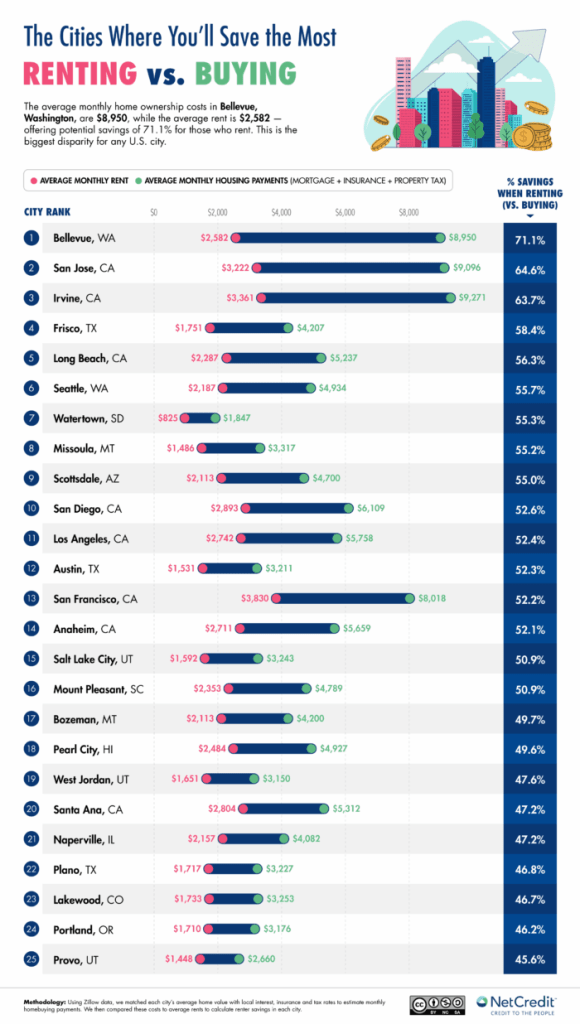
Bellevue, Washington, leads the nation, offering a staggering 71.1% savings to renters.
There, monthly rent averages $2,582, while homeownership costs skyrocket to $8,950.

“While rents in Bellevue are already high, the cost of ownership is far higher still — averaging close to $9,000 per month,” Xu said. “That’s driven by elevated home prices, fueled by sought-after school districts, limited housing supply and a large base of high-income tech workers competing for the same homes.”
Behind it is San Jose, California, where an average rent of $3,222 compares to $9,096 in homeownership, and then Irvine, California, with $3,361 for average rent and $9,271 for the rate of homeownership, marking a 64.6% and 63.7% difference, respectively.
Some of the widest price gaps occur in upscale markets where high demand has driven home values far past rental rates, according to an analysis of all rental properties rather than just those under $1,500 per month.

Beyond the Arts District in Dallas, the other two upscale neighborhoods where the disparity between renting and owning is over 80% are Barton Creek, in Austin, Texas, and Southside Place, in Houston, Texas. In the former the average monthly rent is $2,081 and the average monthly housing payments are $13,708, an 84.8% disparity. In the latter, rents average $2,342 compared to homeownership costs of $13,760, an 83% difference.
“When evaluating rent vs. buy options, it’s important to consider both market trends and how long you plan to stay in your next home,” Xu said. “Generally speaking, renting saves more money in the short term, while buying tends to be the stronger choice for long-term wealth accumulation.”