Pete Buttigieg's Bold 2028 Move: What Changed?
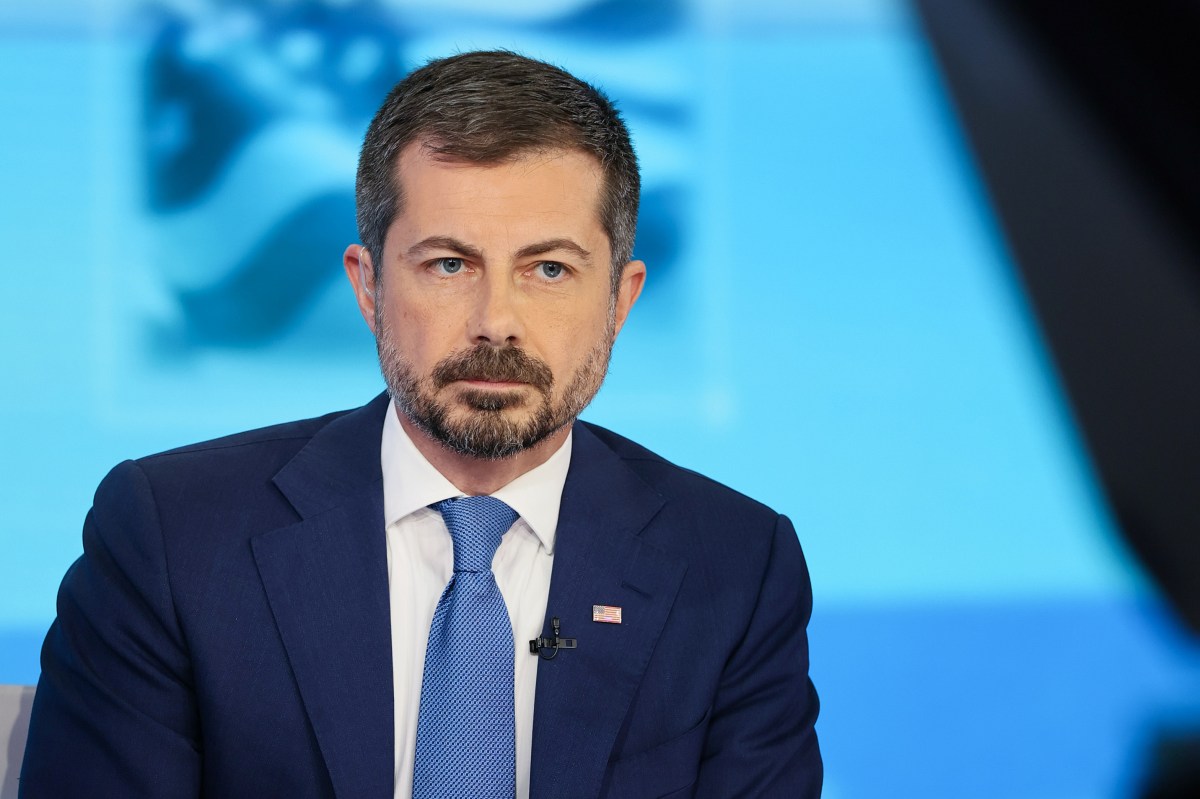
Pete Buttigieg told podcast host Steven Bartlett on The Diary of a CEO that he is "more inclined than not" to run for president again in 2028, a notable shift from the more guarded answers he has given in the past. The former transportation secretary, who finished fifth in the 2020 Democratic primary before Joe Biden secured the nomination, said fatherhood has changed how he weighs the decision. He and his husband, Chasten Buttigieg, adopted twins in 2021."That's changed all of my equations," Buttigieg said. "It's just something that you really sit with and take seriously, which you should."He stopped short of committing. But six years after his surprise breakout in Iowa, early data suggests Buttigieg would enter a 2028 field as one of its strongest contenders, not a long shot.The Polling Points One WayButtigieg has topped or placed near the top of nearly every major 2028 Democratic primary survey released this year, though the timing of each poll matters as much as the result. A Manhattan Institute poll taken from July 1 to July 6 found him in third place with 13 percent support, behind former Vice President Kamala Harris at 19 percent and California Governor Gavin Newsom at 15 percent. An Emerson College survey conducted July 19 and 20 put him in first place with 19 percent, ahead of Newsom at 17 percent, along with New York U.S. Representative Alexandria Ocasio-Cortez and Georgia U.S. Senator Jon Ossoff, who garnered 13 percent apiece. Harris trailed at 8 percent.A Public Sentiment Institute survey of Michigan voters, fielded July 25 to July 29, gave Buttigieg 24.2 percent, more than 10 points ahead of Ossoff. Harris drew just 5.1 percent, a steep drop from the 27 percent she held nationally as recently as June and the 33 percent she held in October.A University of New Hampshire Survey Center poll released in February found Buttigieg leading with 20 percent, narrowly ahead of Ocasio-Cortez and Newsom at 15 percent each. Buttigieg also had the highest favorability rating of any potential candidate tested, at 72 percent.Not every poll agrees with the trend line. A UC Berkeley Citrin Center-Politico survey of California voters, fielded February 25 to March 3, had Newsom leading Harris at home, 28 percent to 14 percent, with Buttigieg in fourth at 11 percent, behind Ocasio-Cortez at 12 percent. An earlier Manhattan Institute survey, fielded February 6 to 15, told a similar story nationally: Harris at 23 percent, Newsom at 20 percent and Buttigieg at just 8 percent, before his summer gains. The volatility reflects a field where, in one survey, 16 percent of voters said they remained unsure, and the first primary is still more than 17 months away.Prediction Markets Are Not as ConvincedIf polling shows Buttigieg surging, prediction markets have been slower to move. As of early August, Polymarket priced Newsom as the favorite for the Democratic nomination at 19 percent, followed by Ocasio-Cortez at 15 percent, Ossoff at 14 percent and Harris at 9 percent. Kalshi's market showed a similar order, with Newsom at 18 percent, Ossoff at 15 percent, Ocasio-Cortez at 14 percent and Harris at 9.5 percent.Buttigieg's own market odds have lagged behind his polling gains, hovering in the mid-single digits for much of the year even as he led individual surveys....Outsider or Establishment? Depends Who's AskingThat question sits at the center of Buttigieg's positioning in a primary shaping up around an anti-establishment mood inside the party. Ocasio-Cortez has drawn large crowds touring with Vermont Senator Bernie Sanders, an independent, under a "Fighting Oligarchy" banner. Progressive candidate Graham Platner's win over Maine Governor Janet Mills, a Democrat, in a Senate primary and the rise of Democratic Socialists of America (DSA)-aligned candidates in House races have strategists describing the moment as a leftward, anti-incumbent one.Buttigieg has tried to occupy both lanes at once. He praised then-New York City mayoral nominee Zohran Mamdani's "capacity to be a great mayor" and called himself simply a "Buttigieg Democrat" when Fox News pressed him on whether he would disavow DSA positions like abolishing the Senate. At the same time, his 2020 identity as a small-town, Midwestern mayor taking on the Washington field still shapes how some Democratic strategists describe him."In 2028, the Democratic nominee has to be someone Washington didn't create and can't control," Republican strategist Colin Coley told The Hill, naming Kentucky Governor Andy Beshear as a better fit than establishment-tied figures.Others see Buttigieg differently now. Ettingermentum, a newsletter tracking the invisible primary, dropped him from its top 10 entirely this summer, arguing his "high-effort, low-impact shadow campaign" has struggled against the party's leftward drift. A Manhattan Institute poll found zero percent of Black respondents naming him as their choice, a gap one unnamed Democratic strategist told The Hill he is "clearly trying to fix."The 2020 PrecedentButtigieg’s early strength in 2028 echoes his 2020 rise. He entered that race as a 37-year-old mayor of a city of about 100,000 people, with no statewide or federal office experience and limited national recognition. He went on to win Iowa, narrowly finish second in New Hampshire behind Sanders, and build a national following before Biden’s South Carolina victory reshaped the contest.That history matters in his current standing. New Hampshire Institute of Politics Director Neil Levesque said voters there "focused in on him" once before and appear to be doing so again: "This state was just made for him." The memory of 2020 is part of why Democratic operatives are taking his early numbers seriously, even as prediction markets and other polling point to a crowded and unsettled field.The early data points to Buttigieg as a candidate with clear primary appeal, a significant challenge among Black voters and an unresolved question: whether Democrats in 2028 are looking for an outsider, an insider or someone who can credibly present himself as both.A key part of Buttigieg’s strategy has been frequent appearances on Fox News, where he has debated hosts over U.S. Immigration and Customs Enforcement raids, the Iran war and Trump administration policies in a space many Democratic contenders avoid. Strategist Steve Schale said Buttigieg has a rare ability: "He can effectively indict the Trump presidency while still giving Democrats an aspirational vision for the future."Contact Newsweek editors on this story: Jason Lemon and Edward T. Cummins.